Films and photographies
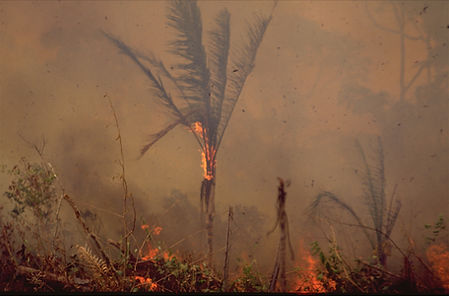
Frans Krajcberg found in photography a means to fulfill his artistic mission with a weapon far more powerful than mere aesthetics. His testimony is undeniable and can be reproduced infinitely. Although he does not consider himself a photographer, despite the great quality of his images, photography became the ideal tool to denounce the ongoing tragedy: the destruction of nature, a frozen image of a world disappearing forever.
Behind the lens, Frans Krajcberg retained a sense of wonder intact, with eyes and a soul in constant alert. Every day, he honed his artistic gaze and fueled his “revolt” by tirelessly photographing the details of the nature that fascinates him and whose resilience he admires. Photography became indispensable for him to raise awareness on a large scale and to convey his message to future generations.
.jpg)
Pierre Restany, in the Rio Negro Manifesto, highlights the humility and openness of the photographic gaze: “Practicing this openness toward the given natural world means acknowledging the modesty of human perception and its own limits, in relation to a whole that is an end in itself. This discipline, aware of its limits, is the foremost quality of a good reporter.”
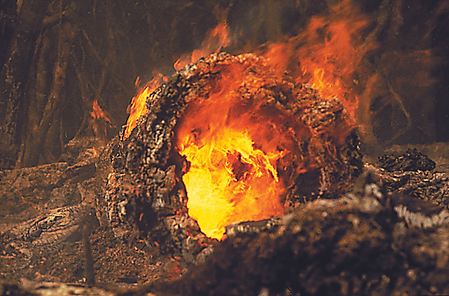
Thousands of photographs taken by Frans Krajcberg document nature deliberately destroyed by humans. Fire, an irreversible “reality,” lies at the heart of this destruction. His images do not merely reveal horror; they confront the fragile beauty of nature with its imminent disappearance: the colorful soils of Minas Gerais juxtaposed with the blackened burn scars of Paraná; the magical translucence of indestructible stones against the ephemerality of a flower; the delicacy of a young sprout contrasted with the ashes of an ancient tree.
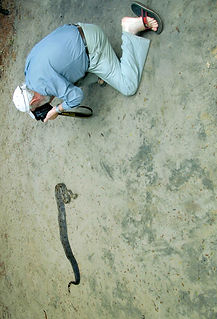
His mastery of macrophotography reveals striking details: leaf veins, flower pistils, earth textures, insect paths, snake tracks, spiderweb labyrinths, the transparency of larvae…
More rarely, his films capture life in slow motion, with a fascinated stillness, following the slightest flutter. Water, wind, and light become, under his eye, pictorial works of abstract art, displaying perfectly mastered plastic beauty.
Even when depicting destruction, his images magnify life: trees that have lost their original verticality forming a new landscape; white lands—products of burn scars—replacing green expanses; the plant world transformed into a mineral one, emptied of animal substance… Yet among the ashes, a leaf emerges, a flower is reborn—infinitely fragile and beautiful.
Once again, Frans Krajcberg chooses to display, to reveal, to resist. “My work is a manifesto. I cannot write; I am not a politician… I must find the image that carries my cry of revolt. Photography has helped me capture moments of beauty and destruction, to record what is disappearing.”
.jpg)
.jpg)

.jpg)
.jpeg)
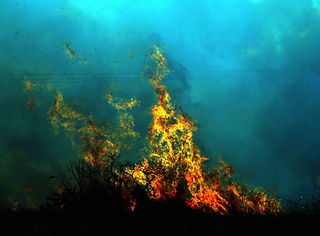
Queimadas
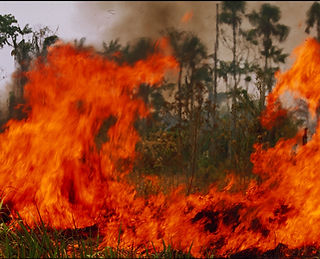
For Frans Krajcberg, his work is a constant manifesto: “I don’t know how to write, I am not a politician… I must find the image that expresses my cry of revolt. Photography has helped me capture the moment of beauty, of destruction, to record what is disappearing… I am a burned man. Fire is death, the abyss. Fire has always been with me. My message is tragic. I show the crime.”
Frans Krajcberg’s photographic work on deforestation in the Amazon is his way of exorcising the traumas of war, where he lost his entire family. His testimony is raw, deliberately shocking, sometimes made at the risk of his own life — he received several death threats.
His photos of trees in flames, twisted, glowing red, half in ashes, denounce and reveal what people refuse to see. Yet they remain bearers of hope for those who open their eyes. Amid the ashes covering the ground, a root, a fern embryo, or a delicate flower emerges — a promise of rebirth.
“We are confronted with a powerful discourse that reveals to us, without any renunciation, the violence we are capable of against nature. Krajcberg is a teacher; through his works, he passes on a crucial lesson for all of us: there is no future without balance, without a natural contract,” emphasizes Juliano Souza Matos.